Seven Women, One Calling
Meet seven physician assistants whose friendship, passion for medicine, and commitment to helping others extends far beyond the hospital.
For these seven women, a typical workday can mean long hours in the operating room, caring for critically ill patients, responding to trauma, performing procedures, delivering babies, and making decisions that can have an immediate impact on someone's life.
Ashley Higby, Srna Sunik, Sofia Major, Victoria Dic, Marissa Lipari, Amy Uthup, and Sara Major have each found their own path within medicine, but they share much more than a demanding profession. They have built a friendship rooted in a shared passion for patient care, a love of their work, and a commitment to giving back.
And when your career regularly keeps you on your feet for 8, 12, or even 15 hours at a time, having the right shoes matter.
Seven Paths Into Medicine
Each woman was drawn to the physician assistant profession for her own reasons.
For Ashley Higby, a labor and delivery physician assistant with five years of experience, it was the fascination with the human body and the opportunity to help people through some of the most challenging moments of their lives.
Amy Uthup, an orthopedic surgery physician assistant, knew she wanted to work in medicine while also maintaining a healthy work-life balance. Her own experience with knee surgery as a middle schooler gave her a early introduction to the profession.
Victoria Dic's path to orthopedic surgery began as an athletic trainer. After working alongside physician assistants, she found herself drawn to the profession and realized that orthopedics was a natural fit for her background.
For others, medicine was something they grew up around. Marissa Lipari developed an interest in medicine while growing up with parents who were pharmacists. Sara Major was inspired by both of her parents, including her father, a surgical physician assistant, and her mother, a speech-language pathologist specializing in traumatic brain injuries.
Sofia Major's path was similarly shaped by family. Her father transitioned from biochemistry into becoming a physician assistant, and her sister later followed the same path. Watching them develop their medical careers across a variety of specialties showed Sofia the flexibility and possibilities that come with being a PA.
For Srna Sunik's, the decision was a little simpler: she knew she didn't want to spend her career sitting behind a desk.
While their reasons for entering medicine may be different, they all found a profession that keeps them learning, moving, and directly involved in patient care.
No Two Days Look the Same
If there's one thing these women can agree on, it's that there is no such thing as a predictable workday.
As a vascular surgery ACP supervisor, Srna's days can range from spending an entire day in the operating room to seeing patients face-to-face or working on quality improvement projects.
Ashley may spend her day seeing postpartum patients, admitting patients in labor, triaging patients, operating, and delivering babies.
Victoria's orthopedic surgery days can include rounding on patients, admitting and discharging patients, seeing emergency department consults, performing procedures and reductions, and first assisting in the operating room.
For Sofia, working nights in a surgical and trauma ICU means every shift brings a new set of challenges. She may be responding to overnight events in the ICU, evaluating emergent
trauma and general surgery consults, or caring for patients who require an upgrade to intensive care.
Marissa begins her day at 6 a.m., examining patients before presenting their cases during ICU rounds. Her day can also include new consults and bedside procedures to stabilize patients.
Amy's days involve rounding on pre- and postoperative patients, writing progress notes, completing consults, and scrubbing into trauma and joint replacement cases.
And Sara works in trauma surgery and surgical critical care, responding to, stabilizing, and caring for critically ill patients in both the trauma bay and ICU.
It's work that demands focus, adaptability, and stamina.
Made for the Long Haul
For this group, being on your feet is simply part of the job.
Their time standing can range from six hours to nearly their entire shift. Victoria can spend 12 or more hours on her feet on an OR day. Amy works 13-hour shifts, and Sara estimates that she can spend as many as 15 hours on her feet.
Sofia knows firsthand what that kind of standing can feel like. As a student, she remembers wearing sneakers in the operating room and ending the day with pounding feet. That's when she ordered her first pair of Calzuro clogs.
Today, the ground has found that having a shoe that can handle the demands of their work makes a difference.
"They're the only shoes that can keep up with my long days, from the OR to the trauma bay. Durable enough for the chaos, comfortable enough for the long hours, and fun as well." - Sara Major
For Victoria, comfort is especially important during long OR days. She says Calzuro clogs have been a game changer, helping her get through long shifts without the foot and back pain she experienced before.
Amy appreciates the support they provide during long, efficient workdays, while Marissa still wears her very first pair, a testament to the durability she values most.
The practical benefits matter, too. Working in surgical environments means that spills and messes are inevitable. For several of the women, being able to easily clean their clogs is just as important as comfort.
Sofia also appreciates the arch support, wide sole, and ventilation provided by the holes in her clogs. For her, Calzuro clogs and compression socks are an essential combination for long ICU shifts.
Seven Women, Seven Styles
While the women share a profession and a love of Calzuro, their individual styles are anything but identical.
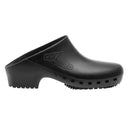
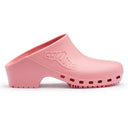
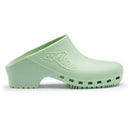
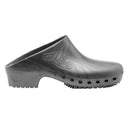
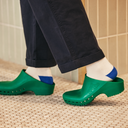
Ashley wears Classics without holes in Maroon. Srna wears Classics without holes in Light Blue, while Sofia reaches for Classics with holes in Metallic Grey.
Victoria wears Classics without holes in Pistachio, Marissa wears Classics without holes in Metallic Grey and Amy chooses Classics without holes in Lavender. Sara adds a little more personality with her Classic clogs with holes in Tie Dye Blue.
Comfort may be the common thread, but the colors let each personality shine through. And that may be part of what makes the group so special. They can understand the demands of each other's careers while still bringing their own experiences, interests, and
perspectives to the friendship.
Together, Beyond the Hospital
Their friendship doesn't stop when their shifts end.
As a group of surgical physicians assistants, the women also volunteer their time and medical expertise in Honduras, providing care to people who have limited access to healthcare.
For Sofia, that connection to Honduras began years ago. Starting in high school, she traveled alongside her father and sister with a nonprofit medical brigade serving communities in Honduras. Today, she and her sister continue to return, joined by PA friends who volunteer their time and skills.
It's an experience that has allowed the group to take what they do every day and bring it somewhere it is deeply needed.
For Ashley, the experience is incredibly rewarding.
"We bring our knowledge to Honduras to help those in need of healthcare. It is incredibly rewarding to provide care to those who have little to no healthcare."
It's a natural extension of what drives each of them in their careers: showing up for people
when they need care most.
A Shared Commitment to Care
Between long shifts, demanding specialties, and time spent giving back, these seven women have found something special in having friends who understand the realities of their work.
They understand the unpredictable days. The long days. The difficult cases. The moments that make the job worthwhile.
And they understand the important of having people in your corner.
Their careers may take them into different operating rooms, ICUs, trauma bays, and hospitals, but their shared commitment remains the same: caring for patients, continuing to learn, and making a difference wherever they can.
For seven physician assistants who spend their days on the move, it's fitting that they have found a way to keep moving forward together.












Ashley Higby, Srna Sunik, Sofia Major, Victoria Dic, Marissa Lipari, Amy Uthup, and Sara Major
Seven Women, One Calling
Meet seven physician assistants whose friendship, passion for medicine, and commitment to helping others extends far beyond the hospital.
For these seven women, a typical workday can mean long hours in the operating room, caring for critically ill patients, responding to trauma, performing procedures, delivering babies, and making decisions that can have an immediate impact on someone's life.
Ashley Higby, Srna Sunik, Sofia Major, Victoria Dic, Marissa Lipari, Amy Uthup, and Sara Major have each found their own path within medicine, but they share much more than a demanding profession. They have built a friendship rooted in a shared passion for patient care, a love of their work, and a commitment to giving back.
And when your career regularly keeps you on your feet for 8, 12, or even 15 hours at a time, having the right shoes matter.
Seven Paths Into Medicine
Each woman was drawn to the physician assistant profession for her own reasons.
For Ashley Higby, a labor and delivery physician assistant with five years of experience, it was the fascination with the human body and the opportunity to help people through some of the most challenging moments of their lives.
Amy Uthup, an orthopedic surgery physician assistant, knew she wanted to work in medicine while also maintaining a healthy work-life balance. Her own experience with knee surgery as a middle schooler gave her a early introduction to the profession.
Victoria Dic's path to orthopedic surgery began as an athletic trainer. After working alongside physician assistants, she found herself drawn to the profession and realized that orthopedics was a natural fit for her background.
For others, medicine was something they grew up around. Marissa Lipari developed an interest in medicine while growing up with parents who were pharmacists. Sara Major was inspired by both of her parents, including her father, a surgical physician assistant, and her mother, a speech-language pathologist specializing in traumatic brain injuries.
Sofia Major's path was similarly shaped by family. Her father transitioned from biochemistry into becoming a physician assistant, and her sister later followed the same path. Watching them develop their medical careers across a variety of specialties showed Sofia the flexibility and possibilities that come with being a PA.
For Srna Sunik's, the decision was a little simpler: she knew she didn't want to spend her career sitting behind a desk.
While their reasons for entering medicine may be different, they all found a profession that keeps them learning, moving, and directly involved in patient care.
No Two Days Look the Same
If there's one thing these women can agree on, it's that there is no such thing as a predictable workday.
As a vascular surgery ACP supervisor, Srna's days can range from spending an entire day in the operating room to seeing patients face-to-face or working on quality improvement projects.
Ashley may spend her day seeing postpartum patients, admitting patients in labor, triaging patients, operating, and delivering babies.
Victoria's orthopedic surgery days can include rounding on patients, admitting and discharging patients, seeing emergency department consults, performing procedures and reductions, and first assisting in the operating room.
For Sofia, working nights in a surgical and trauma ICU means every shift brings a new set of challenges. She may be responding to overnight events in the ICU, evaluating emergent
trauma and general surgery consults, or caring for patients who require an upgrade to intensive care.
Marissa begins her day at 6 a.m., examining patients before presenting their cases during ICU rounds. Her day can also include new consults and bedside procedures to stabilize patients.
Amy's days involve rounding on pre- and postoperative patients, writing progress notes, completing consults, and scrubbing into trauma and joint replacement cases.
And Sara works in trauma surgery and surgical critical care, responding to, stabilizing, and caring for critically ill patients in both the trauma bay and ICU.
It's work that demands focus, adaptability, and stamina.
Made for the Long Haul
For this group, being on your feet is simply part of the job.
Their time standing can range from six hours to nearly their entire shift. Victoria can spend 12 or more hours on her feet on an OR day. Amy works 13-hour shifts, and Sara estimates that she can spend as many as 15 hours on her feet.
Sofia knows firsthand what that kind of standing can feel like. As a student, she remembers wearing sneakers in the operating room and ending the day with pounding feet. That's when she ordered her first pair of Calzuro clogs.
Today, the ground has found that having a shoe that can handle the demands of their work makes a difference.
For Victoria, comfort is especially important during long OR days. She says Calzuro clogs have been a game changer, helping her get through long shifts without the foot and back pain she experienced before.
Amy appreciates the support they provide during long, efficient workdays, while Marissa still wears her very first pair, a testament to the durability she values most.
The practical benefits matter, too. Working in surgical environments means that spills and messes are inevitable. For several of the women, being able to easily clean their clogs is just as important as comfort.
Sofia also appreciates the arch support, wide sole, and ventilation provided by the holes in her clogs. For her, Calzuro clogs and compression socks are an essential combination for long ICU shifts.
Seven Women, Seven Styles
While the women share a profession and a love of Calzuro, their individual styles are anything but identical.
Ashley wears Classics without holes in Maroon. Srna wears Classics without holes in Light Blue, while Sofia reaches for Classics with holes in Metallic Grey.
Victoria wears Classics without holes in Pistachio, Marissa wears Classics without holes in Metallic Grey and Amy chooses Classics without holes in Lavender. Sara adds a little more personality with her Classic clogs with holes in Tie Dye Blue.
Comfort may be the common thread, but the colors let each personality shine through. And that may be part of what makes the group so special. They can understand the demands of each other's careers while still bringing their own experiences, interests, and
perspectives to the friendship.
Together, Beyond the Hospital
Their friendship doesn't stop when their shifts end.
As a group of surgical physicians assistants, the women also volunteer their time and medical expertise in Honduras, providing care to people who have limited access to healthcare.
For Sofia, that connection to Honduras began years ago. Starting in high school, she traveled alongside her father and sister with a nonprofit medical brigade serving communities in Honduras. Today, she and her sister continue to return, joined by PA friends who volunteer their time and skills.
It's an experience that has allowed the group to take what they do every day and bring it somewhere it is deeply needed.
For Ashley, the experience is incredibly rewarding.
It's a natural extension of what drives each of them in their careers: showing up for people
when they need care most.
A Shared Commitment to Care
Between long shifts, demanding specialties, and time spent giving back, these seven women have found something special in having friends who understand the realities of their work.
They understand the unpredictable days. The long days. The difficult cases. The moments that make the job worthwhile.
And they understand the important of having people in your corner.
Their careers may take them into different operating rooms, ICUs, trauma bays, and hospitals, but their shared commitment remains the same: caring for patients, continuing to learn, and making a difference wherever they can.
For seven physician assistants who spend their days on the move, it's fitting that they have found a way to keep moving forward together.